-circuit-1.jpg)
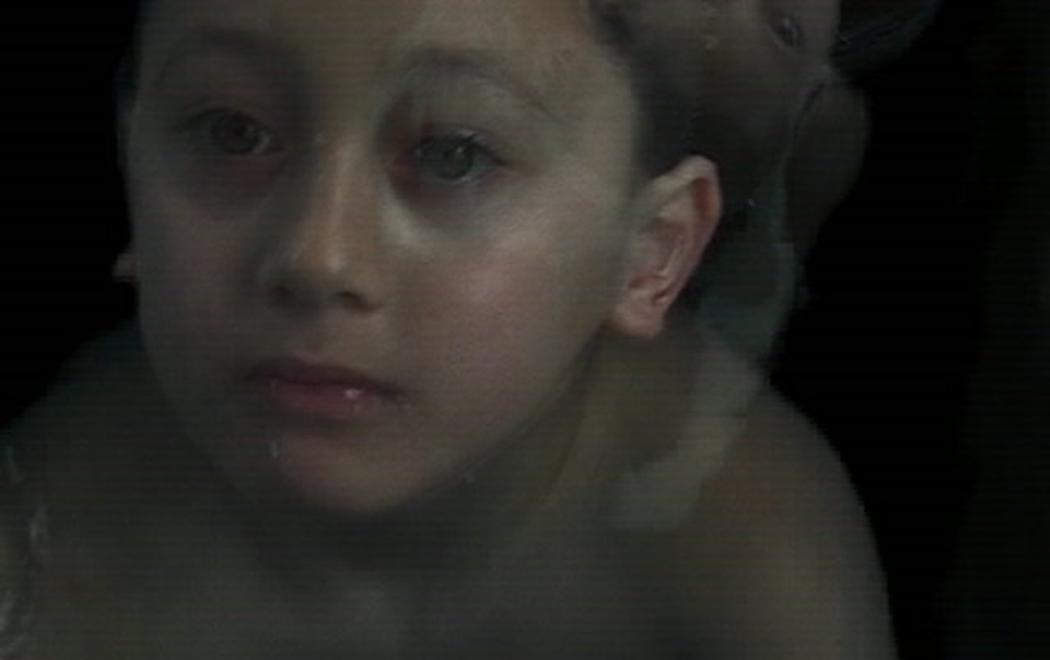
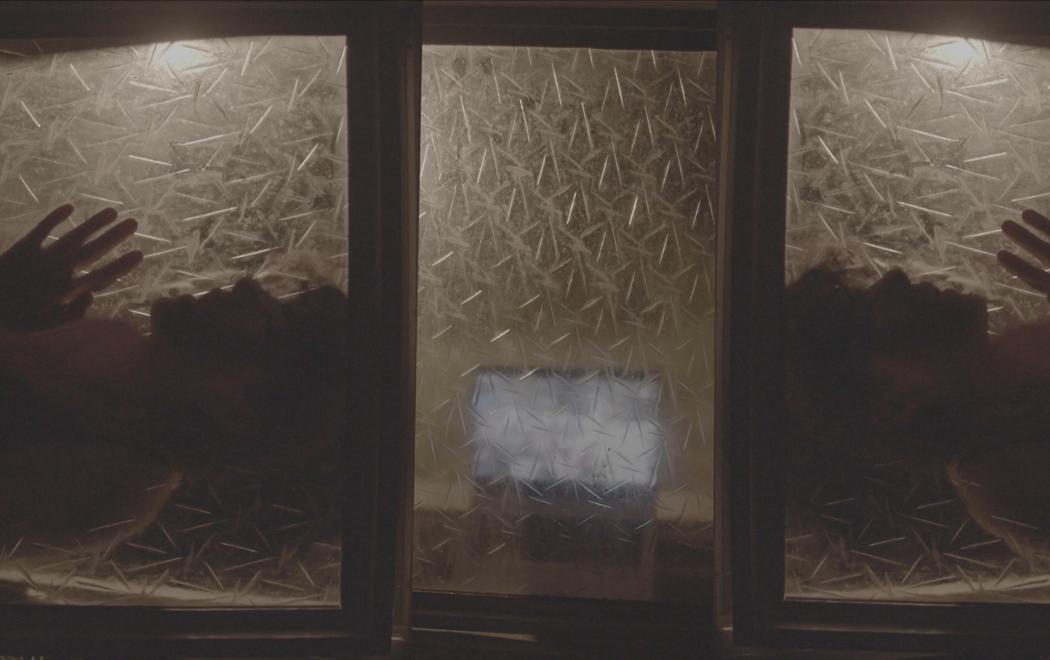
Kumutoto Peephole begins with a still shot of concrete that gradually gives way to a circular aperture revealing Kumutoto — it expands like an eye after slumber, or a birth canal preparing for the transition between te pō and te ao. The frame widens and narratives unfold within the awa: kōaro and kōkopu swimming against the current, kōhatu tumbling over one another. Sarah Hudson and Rachel Anson pass the rākau, the metaphorical microphone, and the camera, to the awa, and entrust it with the images to revive its agency.[1]
Kumutoto Peephole doesn’t just show the awa; it allows the awa to determine rhythm and temporality until, without warning, the aperture closes and the awa drains back into the concrete, reduced once more to a pebble.
At the centre of this work is a tension between two material bodies. The concrete’s visual dominance foregrounds the spatial hegemony of the urban environment and its propensity for land-take (which has marked Kumutoto), while its stillness evokes a brick in Frantz Fanon’s monolithic Tower of the Past: a domineering structure that stands as a reminder of the city’s colonial legacies, imprisoning colonised bodies (human and more-than-human) physically, psychologically, and spiritually.[2] From this stillness, the awa emerges as a counterpoint, its vitality evident in its unceasing flow — similar to the rush hour chaos of yo-pros in the Wellington train station. Yet, unlike these commuters, the awa’s labour goes unacknowledged.
Here, the work opens into a broader set of questions: what bodies and work go unseen, unnoticed? What forces sustain life beneath the surfaces we move across every day?
The re-ordering of place through industrialisation and urbanisation buried bodies, histories, and forces deemed expendable and manufactured a false separation between society and te taiao, as though we’re different entities, when in reality we’re composed of the same matter and follow the same motions. How different, really, is a climbing kōaro from a high schooler in transit?
There’s a broader, gendered aspect to these questions, too: the unseen labour of the awa mirrors the gendered dimension of unseen labour in society. Again, the awa mirrors our physicality (particularly marginalised peoples): moving out of the way, making oneself smaller. The back-breaking work the racial capitalist patriarchy demands ultimately drains the body of life. And when these bodies (people and the awa) are separated and isolated from one another, they lose themselves.
As one of the first streams in Te Whanganui-a-Tara to be culverted, Kumutoto has continually shifted to sustain its inhabitants. Kumutoto, meaning bloody backside in reference to hemorrhoids from giving birth, is a birthing stream.[3] What are the implications when we bury a place like this? And, more excitingly, when we uncover it? What possibilities arise when we reignite the vā between those of us atop the concrete and those below? What happens when we centre relationality?
Sarah Hudson and Rachel Anson, Kumutoto Peephole (2026)
Hudson and Anson’s use of film is crucial. Much of Hudson’s previous work has involved earth pigments, particularly through the Kauae Raro Research Collective, which she co-founded with Lanae Cable and Jordan Davey Emms. But working with whenua inevitably carries concerns around consumption, because without care and intention, it can become extractive and contribute to land degradation. Film, then, became a way for Hudson to counter extraction while still engaging with te taiao.[4] The camera — contrary to its colonial legacy — functions as a relational tool. It allows the awa, its inhabitants, and surrounding kin to emerge without being consumed and offers a glimpse into hidden relational networks.
Something special happens in collaboration that isn’t possible alone. Hudson and Anson came back together for Kumutoto Peephole after ten years of intermittent work. The result is an intimacy between the awa and the audience that emerges through an embodied engagement; it comes from putting your feet in the dirt or wading in the water.
I’m reminded of my conversation with Hudson, where she spoke about community work and collaboration as mundanely natural in her creative practice, especially as an Indigenous person.[5] She described how when working with other practitioners (like in her mahi in the Mataaho Collective and Kauae Raro), they’d spend time figuring things out together in the studio, or standing in streams while talking through ideas. It’s this intimacy between creators, between artists and te taiao, that allows something deeper to emerge. It produces an understanding that isn’t just conceptual, but embodied, felt through shared presence, time, and care.
That kind of embodied attention sharpens what we notice, and what we can no longer ignore. As I write, a short pipe is discharging millions of litres of raw sewage into Te Moana o Raukawa. Mana whenua have placed a rāhui on the impacted area. Locals are outraged and disgusted. The mayor is swimming.[6] The dissonance is jarring, but familiar: the visible and the obscured sitting side by side.
When I heard the news I couldn’t help but think of my homeland, Mā’ohi Nui, and our nuclear legacy, which is overshadowed by the tourism industry’s promotion of an idealised landscape. I thought of Kathy Jetñil-Kijiner walking atop the concrete dome on Runit Island as she recited her poem Anointed, “you became concrete shell, you became solidified history”.[7] I thought of the countless taonga in museums across the world, labelled “Maker: Unknown”.
So much is buried in the wake of colonialism: the mess, the makers. But the pipes are bursting, the concrete is eroding, and taonga are being repatriated. This movement of visibility and return depends on collective effort, because sovereignty is never solitary. It’s achieved by a reworking of relationships and sustained by the formidable community mahi of aunties and uncles, tuakana and teina, communities working patiently, together.
Kumutoto Peephole sits within this movement of revealing. It activates the unseen and makes us conscious of the lives and connections that persist beneath the concrete. It invites us to reconsider how we inhabit spaces, to mihi the unseen labour.
It feels remiss to write about Kumutoto without spending time with it. So, here I am on its forest floor, standing behind two rākau recently planted during the Kumutoto Restoration Project’s weekend working bee programme, in a section of ngahere named after kaitiaki Bart Cox. I stumble over a loose rock because I’m busy thinking about my schedule for the week and the exhaustive walk back up the steps after this. Watch where you’re going, I tell myself — or maybe it’s the awa.
Mauatua Fa'ara-Reynolds is a Mā'ohi-Norf'k writer and tapa-maker based in Te Whanganui-a-Tara.
This essay is presented in patnership with Tāhuhu Kōrero Toi Art History at Te Herenga Waka—Victoria University of Wellington.