The Shamash Stays the Same, but the Atua is Different is a moving-image work by Iraqi artist Mariam Tawfik. Filmed in 2025, the work possesses a psychogeographic quality, employing a methodology through which memory, displacement, and lived experience are assembled into an affective landscape rather than a cartographic representation of place. Through a collage of archival, found, and newly recorded material, Tawfik constructs a multilayered reflection on her first visit to her ancestral lands in Iraq, drawing connections between Iraq and her birthplace and place of residence, Aotearoa—two places to which she is intimately connected.
The title provides an important point of entry into the work. It invites a reading through pūrākau—ancestral narratives that offer ways of understanding relationships between people and place—with atua (ancestors with continuing influence) as a key connective concept. By placing two cosmological frameworks alongside one another—Mesopotamian and Te Ao Māori—the title immediately establishes both resonance and difference.
What struck me first was the contrast between atua and Shamash within the same sentence. There was an immediate sense of familiarity, as though these concepts recognised one another across vast cultural and geographical distances, seeming comfortable when placed together. Yet their pairing also produced a productive sense of estrangement; the relationship between them was not immediately apparent. The title suggests an underlying kinship between distinct cosmological systems without collapsing their differences into equivalence.
Mariam Tawfik, The Shamash Stays the Same, but the Atua is Different (2025)
For audiences in Aotearoa, atua is a widely recognised concept. Atua are ancestral presences embedded within the fabric of the natural world—manifest in the land, sky, oceans, rivers, forests, winds, and volcanic landscapes. They can be understood as both pūtake (progenitors) and kaitiaki (guardians), whose domains continue to shape human relationships with the environment. In contrast, Shamash initially appears linguistically and culturally unfamiliar. The ancient Mesopotamian sun deity, originating from what is now Iraq, Shamash is often associated with justice, truth, and divine order.
Both atua and Shamash articulate ways of understanding the world that refuse to separate the spiritual, environmental, and social realms. Tamanuiterā, the sun ancestor, for example, is not an abstract spiritual figure removed from everyday life; he is an ancestral presence encountered through the physical world—the sun itself. The sun can be seen, felt, and experienced. Through waiata (song) and pūrākau (story), relationships are expressed back to the sun and to ourselves as a means of maintaining this connectedness. These practices demonstrate whakawhanaungatanga (relationality), in which ancestors, environments, and people remain continually connected through whakapapa (genealogy). In some cases, sound and waiata becomes a vehicle through which these relationships are carried across time, sustaining an ancestral continuum.
Waiata often contain pūrākau, carrying these interconnected aspects of life through song. In Te Ao Māori, relationships to people, places, atua, and the more-than-human world can be understood through pūrākau. These narratives are not simply stories of the past; they function as repositories of knowledge, offering ethical, philosophical, and practical guidance for navigating the complexities of life. They are living frameworks through which relationships between humans, ancestors, and the more-than-human world are continually interpreted and renewed.
One example is the pūrākau of Māui slowing down Tamanuiterā, the sun, to extend the length of the day. The ropes used to restrain the sun are understood as remaining within its rays, serving as a reminder of the pūrākau. Numerous waiata also reference this narrative, demonstrating how pūrākau can move between story, sound, place, and lived experience. Within the pūrākau of Shamash, how might ideas of justice, truth, and divine order be understood today, particularly within the socio-political climate of Iraq and its relationship to the wider world?
Mariam Tawhik, The Shamash Stays the Same, but the Atua is Different (2025)
Waiata and Connection
Waiata occupies a foundational place within Te Ao Māori as a sonic archive through which memory, whakapapa, and cultural knowledge are continually recalled, renewed, and recited. More than simply songs, waiata function as living repositories of history, carrying ancestral narratives, genealogies, place-based knowledge, and emotional experience across generations. Their oral transmission means that knowledge is not fixed within written texts but remains embodied through performance, where voice and instrument become vehicles for remembrance and continuity.
In this sense, waiata operates as a citational practice: each performance invokes those who have sung before, recalling tūpuna, events, and relationships while simultaneously producing new meanings within the present. Through repetition and adaptation, waiata demonstrates that memory is not static but resonant—continually reverberating through time. This is not a uniquely Māori framework; similar forms of sonic and embodied cultural transmission exist across the Majority World. Tawfik is attentive to this broader field of cultural transmission, using her creative practice to bring two distinct yet resonant cultural contexts into conversation: Mesopotamia and Te Ao Māori.
The sonic dimension of waiata also reveals the intimate relationship between sound and cosmology in Māori thought. Voice is not merely expressive but relational, connecting people to one another, to whenua, and to atua. The resonance of collective singing transforms memory into a shared, embodied experience, where histories are not only spoken but physically felt through vibration, rhythm, and breath. Such performances collapse distinctions between past and present, allowing ancestral presence to emerge through sound itself. Everything has a voice, a tone, a timbre, a vibration.
Mariam Tawfik, The Shamash Stays the Same, but the Atua is Different (2025)
This understanding of music as a medium of cultural memory extends beyond Aotearoa. In ancient Mesopotamia, music similarly occupied an important role in the preservation of cosmological knowledge, ritual practice, and collective identity. Hymns dedicated to deities such as Shamash, Inanna, and Enlil were performed within temple contexts, where sung invocation established relationships between human and divine realms. Rather than serving solely as artistic expression, these compositions acted as mnemonic technologies, transmitting religious narratives, political authority, and ethical values across generations. Like waiata, Mesopotamian musical traditions relied upon repetition, performance, and oral circulation to sustain knowledge before and alongside written inscription.
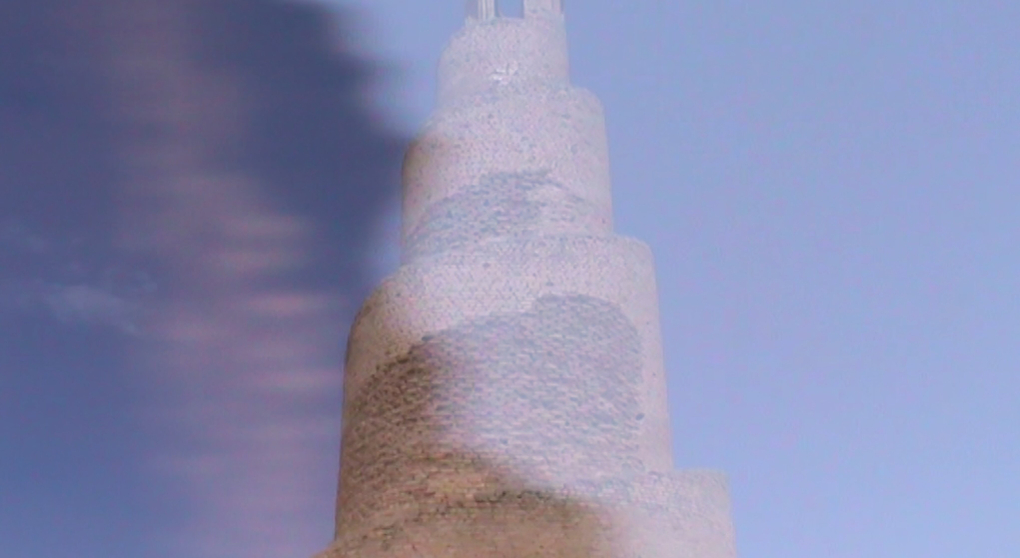
Maqam—a system of melodic modes and associated rules within Arabic music—provides another way of thinking about this relationship between sound, memory, and movement. Maqam can hold histories and cultural knowledge within its melodic structures, allowing performers to move between established musical forms while responding to the present moment. Tawfik interprets these as a kind of sonic portal, where time travel is experienced as the listener departs one musical focus—a history, a pūrākau perhaps—and arrives within another. This melodic oscillation traverses history, place, knowledge, and the body through a contracting and expanding spiral, continually returning to and departing from what has come before. The takarangi (spiral) is also a recurring symbol in Te Ao Māori, embodying a similar movement between return and emergence. In this sense, it offers a useful way of thinking about the knowledge held within waiata and the cyclical processes of whakapapa.
This suggests that music can function as a resonant technology of remembrance across cultures. Whether through the whakapapa carried within waiata or the sacred hymns and musical traditions of Mesopotamia, sound, whether traditional or experimental, becomes a medium through which memory exceeds the limitations of linearity. It animates histories, invokes ancestral or divine presence, and produces forms of collective belonging that are experienced as much through the body as through language. Resonance, therefore, is not simply an acoustic phenomenon but a cultural practice through which communities continually encounter and reconstitute their past within the present.
Mariam Tawfik, The Shamash Stays the Same, but the Atua is Different (2025)
Through field recordings, sampling, and looping—conceptual tools that also intersect with the framework of maqam—Tawfik creates new compositions to support the filmmaking process of The Shamash Stays the Same, but the Atua is Different. Through her revisitation of culturally treasured instruments and sounds within both Aotearoa and Mesopotamian/Iraqi contexts, Tawfik creates unique soundscapes that support and shape each scene within the film.
Sound captured through a Tascam recorder becomes material for further transformation. Field recordings are reworked into new sonic palettes, activated through MIDI keyboard technology and incorporated into the film's compositions. In this process, Tawfik translates her experiences into new cultural presentations: a young voice reawakens ancient traditions through the technologies of the present.
Pūrākau and maqam are not static forms. Rather, they can be understood as containers of knowledge—forms that can be revised, revisited, and recomposed in response to the experiences and environments of people living today. This capacity for renewal becomes particularly significant within a hyper-connected yet equally fragmented world, where histories, places, and identities are continually brought into contact with one another.
It is within this space of resonance, movement, and re-composition that Tawfik's work becomes particularly compelling. The Shamash Stays the Same, but the Atua is Different does not seek to resolve the relationship between Mesopotamian and Māori cosmologies. Instead, it allows them to sit alongside one another: familiar yet estranged, connected yet distinct. Through sound, image, memory, and ancestral knowledge, Tawfik creates a space in which these different systems can encounter one another without becoming the same.
Mariam Tawfik, The Shamash Stays the Same, but the Atua is Different (2025)
Interview
In this interview with Mariam Tawfik, Tyson Campbell frames four directed questions through which The Shamash Stays the Same, but the Atua is Different articulates relationships between ancestors, sound, and the self.
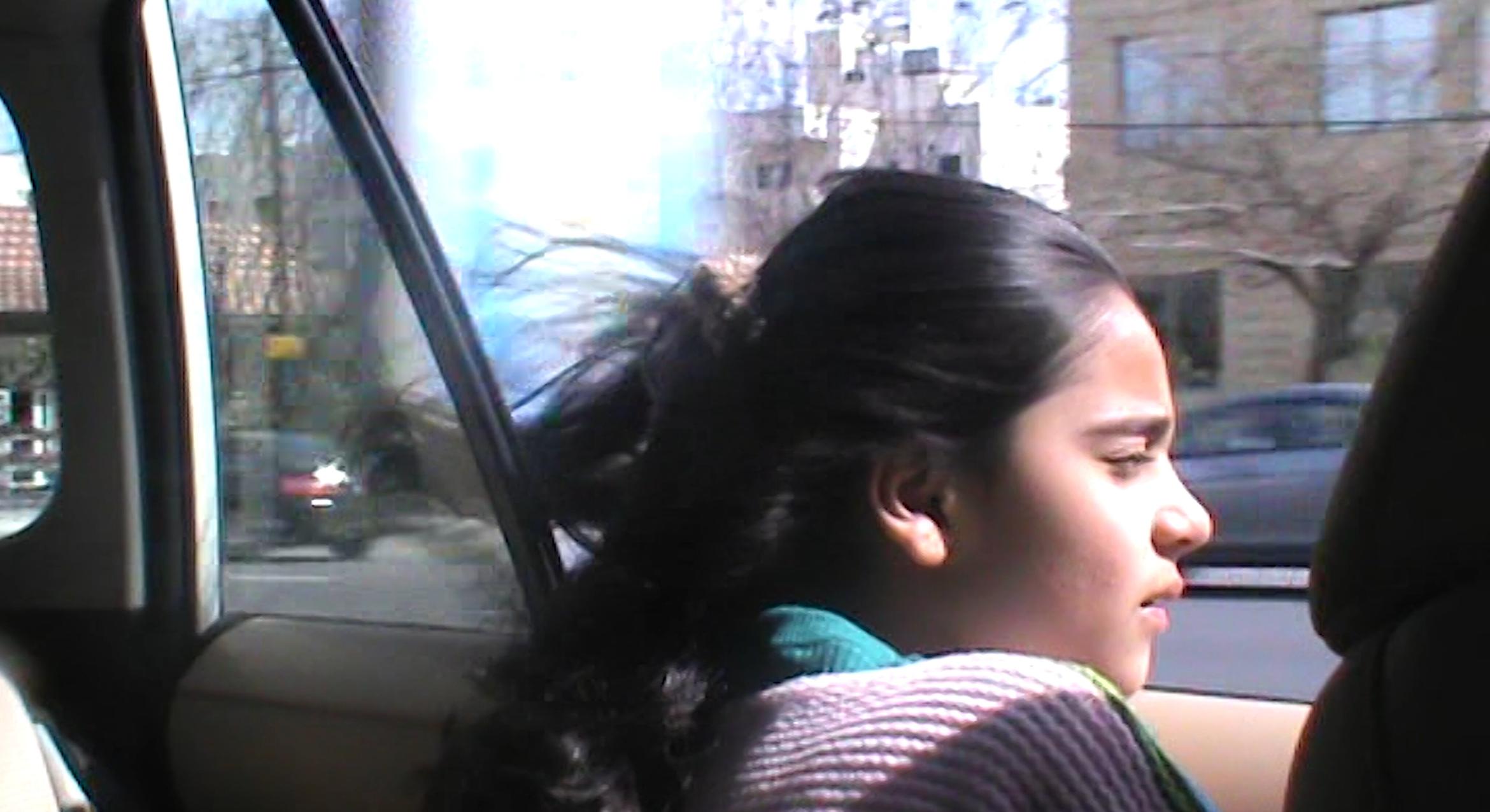
Tyson Campbell: The car is a symbol that occurs at the start of the film, the young girl facing outwards, and at the end, the cityscape panning. What were you thinking when making these edits?
Mariam Tawfik: Going home to Iraq for the first time was like a dream.
Like actually dream like. I wanted to pluck the viewer from the realistic and drop the viewer into a place within the ricochet of an echo, where they could be carried along by the progression of the film. Bringing the viewer closer to my original experience of being inside Iraq, as an Iraqia, but ultimately finding understanding of my country through an adopted Māori worldview of life through Ātua.
An example of this is how I see the parallels between maqam and pūrākau. But first I’lll explain what a maqam is. A maqam (the literal translation to English from Arabic being - “a place, location, or, “your feet standing strongly where they are”) - is a system of melodic improvisation and modulation as a form of language used in folk, instrumental music and vocalisation (for example, the call to prayer).
In this case I speak specifically to Arabic music, as maqams can change tonally within different geographies of the surrounding regions. Maqams work within a system of a starting point or a note that you move away from and explore through microtonal intervals and spaces of musical emotional ascension and finally descend back to your home note/or the beginning note, where it finishes. Completely mathematical and geometric but also shapeless and abstract all at once.
I wanted The Shamash Stays the Same, but the Atua is Different to be presented as a loop and a spiral and also an ascend and descent. Each scene and location resonates into the next to create a constellation of a single place made up of collective memories and narratives. I used the poetics of a maqam to help me with the editing process of my raw footage, and with the composition of the music - kind of like a guiding light
Like there are many different Mesopotamian gods and Ātua within Te Ao Maori, there are several different maqams (maqamat: plural) that are unique in their sound and in their feelings and locations. In the film, the edits are made into 10 scenes or maqams and they each have a title. These maqams are guided by temples in Iraq, the Atua they exist for and the instruments that were historically played for them.
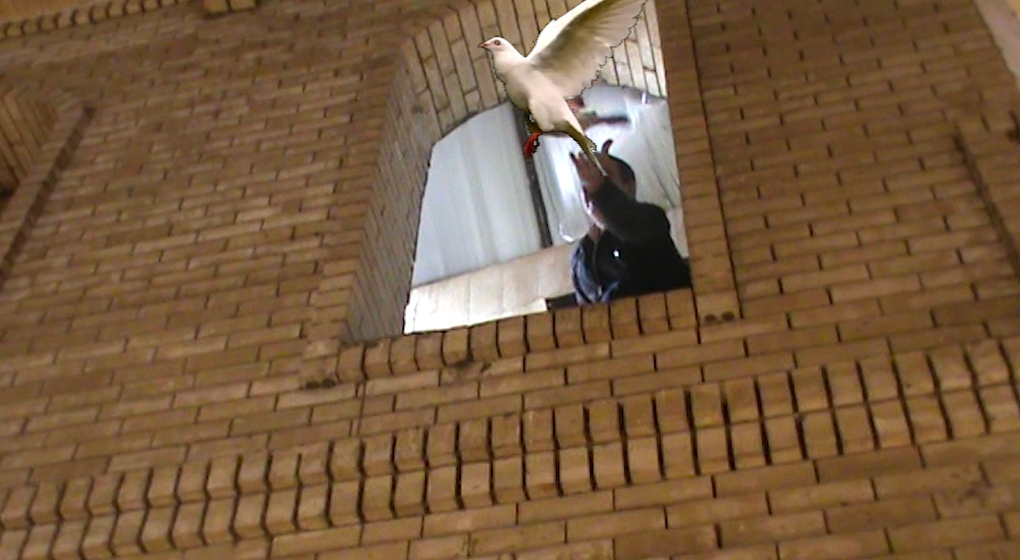
I named the first scene, Asfoura (meaning small bird in Arabic) - a reference to the song playing in car:
عصفور طل من الشباك قالي يا نونو
خبيني عندك خبيني، دخلك يا نونو
خبيني عندك خبيني، دخلك يا نونو
خبيني عندك خبيني، دخلك يا نونو
قلتله إنت من وين
قالي من حدود السما
قلتله جاي من وين
قالي من بيت الجيران
قلتله خايف من مين
قالي من القفص هربان
قلتله ريشاتك وين
قالي فرفطها الزمان
A small bird peeked through the window and said
"Oh, little one, hide me, please"
I asked him, "Where are you from?"
He said, "From the edge of the sky."
I asked him, "Where did you come from?"
He said, "From the neighbor's house."
I asked him, "Who are you afraid of?"
He said, "I escaped from the cage."
I asked him, "Where are your feathers?"
He said, "Time scattered them."
This can be considered the home note of the beginning of the maqamat of the film. This is a moment of lucidity and a tender moment of Shamash’s touch. An observation of a young girl experiencing things moving past her, before an ascension into the next scene where the film starts to move into its more rippled scales, sounds and locations. The instruments used are echoed and layered on top of one another like memories or recollections of dreams.
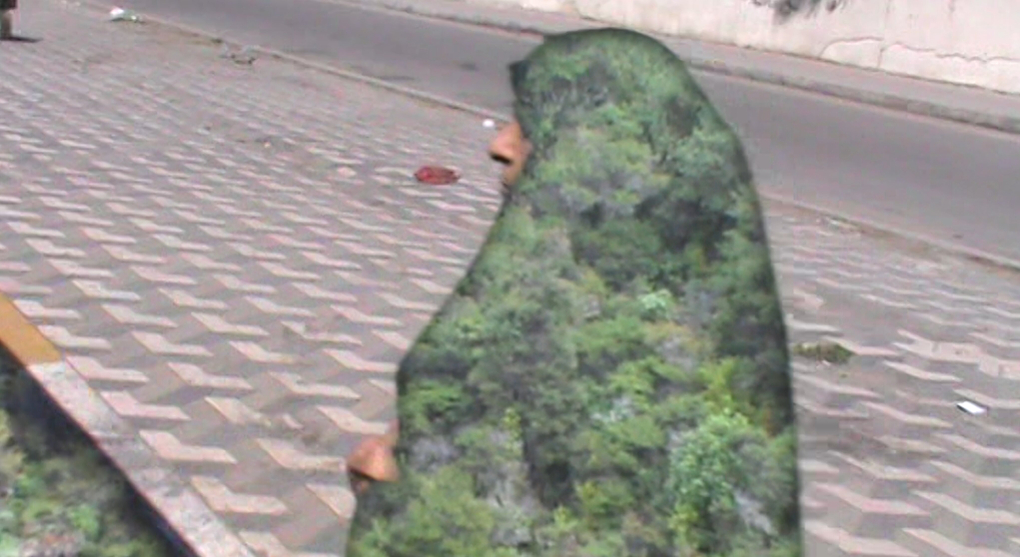
The film ends with the scene, Baghdad in the Ngahere (filmed both on Falastine Street in Baghdad and the inside of Rangitoto in Aotearoa) it is now our perspective from the vehicle, there is a moment we see a woman walking, the sky cracks open, Iraq, the woman and the ngahere tessellate into one. The end scene or final maqam - is the return to home note of a still crater and the maqamat of little birds.
Mariam Tawfik, The Shamash Stays the Same, but the Atua is Different (2025)
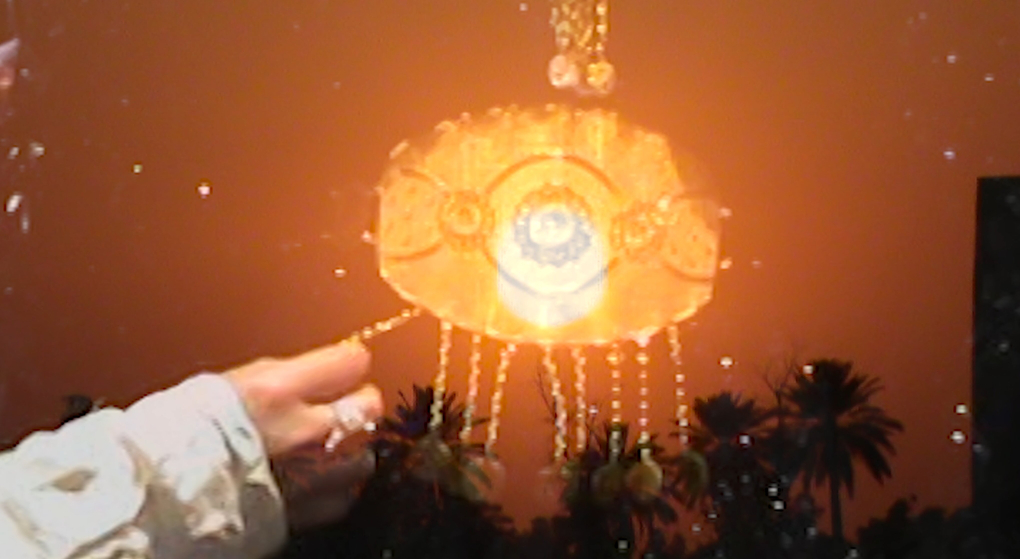
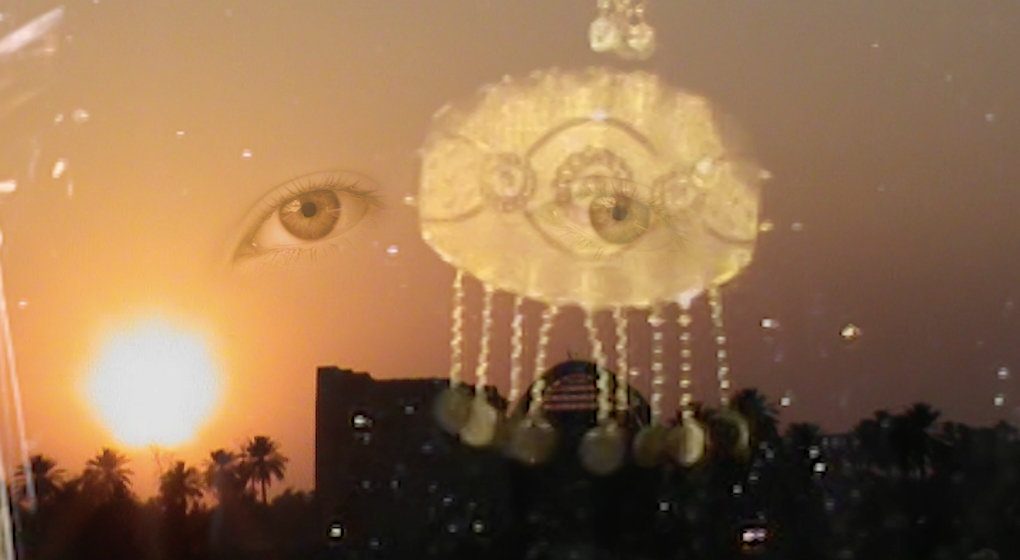
Tyson Campbell: At the time 06.17 there is a cloud-like object dangling in the sun. What were you thinking about in this frame?
Mariam Tawfik: This maqam is titled Two Eyes and Two Suns Set at Taq-e-kisra.
It is a descension from the previous scene titled Sufi in Samarra - which was a moment of a call and response between tupuna, darbukka and the divine.
In Two Eyes and Two Suns Set at Taq-e-kisra, we dramatically drop into a lucid perspective just before we sonically move into the Lyre of Ur (or my closest recreation of what I imagine it to sound like) - the first stringed instrument (found in Ur which was a city in the region of Sumer, in Southern Mesopotamian - modern day Tell el-Muqayyar, Iraq). This harp-like instrument dating back to roughly 2500 BCE, was adorned with a bull head carving to represent Utu, the deity of sun, light and divine justice (in a Sumerian context). Also represented as Shamash (Mesopotamian context) or Tamanuiterā (Māori context).
I was thinking about adorning the sun. Like adorning memories that you carry with you from a young age. There are some that you choose, subconsciously or not, to keep warm and bright despite what was happening in the peripheral.
My dad had always told me that when I finally go to Iraq, if there’s anything I should do, is go and see “the-largest-non-reinforced-clay-arch-in-the-world”. And when I went to Iraq, I did.
It was a place I was told people would sit and eat food with their families. That’s what I imagined I would see. It was the biggest arch in the world that wasn’t reinforced. That’s what I imagined I would see. I was thinking of my understanding of Iraq, which had always been through the eyes of my parents' memories (who haven't gone back since they left) and what realities stared back at me, and who was with me when I made my own understanding of it.
Making a decision of what parts I will share with them through my eyes 30 years later.
This scene is my memory of going to the-largest-non-reinforced-clay-arch-in-the-world for the first time and watching the Atua of the sun bend off and in between the maihi of Taq-e-kisra, arms and eyes wrapping us up.
Mariam Tawfik, The Shamash Stays the Same, but the Atua is Different (2025)
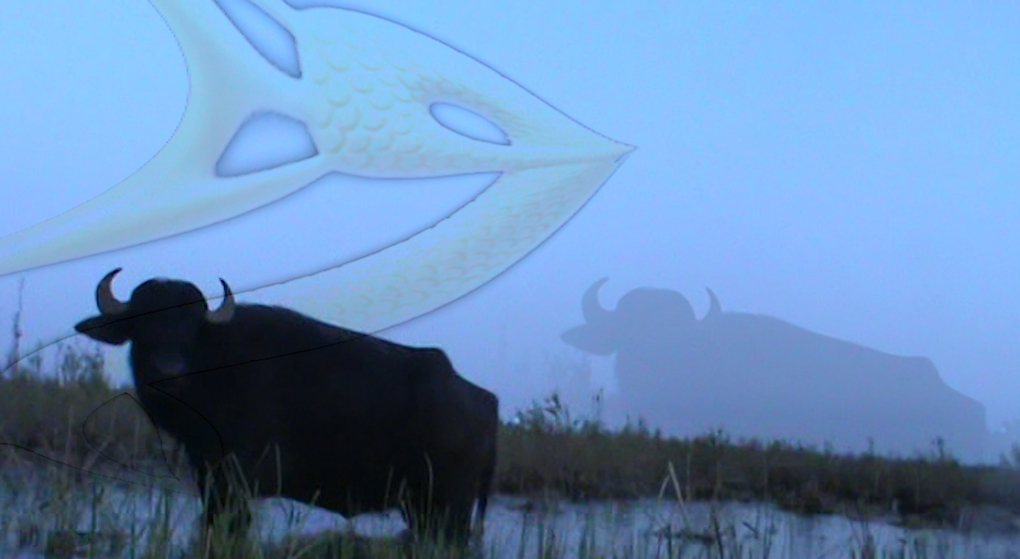
Tyson Campbell: There is a shot of a bull, then into the reeds and a river. Perhaps Euphrates or Tigris? What were you thinking about in this frame, too?
Mariam Tawfik: This maqam is titled: Hinetītama and Aya Welcome the Day with a Duet through the Echos of a Kōauau and a Qassaba.
This was shot at dawn on the River Euphrates, in Chibayish. The marshlands of Iraq. Once completely dammed resulting in the displacement of thousands of people who lived on the awa, in houses similar to whare raupō, now very slowly showing signs of regeneration and restoration of biodiversity.
When I was watching the reeds dance in the wai, and looking at the way the carved boat modulated the awa, all I could think was raupō and taniwha. Are there Iraqi taniwhas? What or who might they look like? Is this place tapu? How can I ask these questions when I don’t know how to translate them to Arabic.
I’ll ask the wind.
I imagined I could feel safe to ask Aya (Mesopotamian goddess of dawn) and surely she’d be friends with Hinetītama (Māori context). The Water Baffalos felt like a tohu of this and they both answered back with their instruments. One made from reed and one made from wood, their breath creating two different frequencies and maqamat that mirrored one another.
Tyson Campbell: Is the cultural connection to music inherently political, and if so, what can we learn from it, in relation to your practice?
Mariam Tawfik: I believe music and pūrakau are both ways that people encapsulate narratives of our cultural histories. The most beautiful histories of our places and people, but within that beauty there are also parts that are devastating.
In Iraq, there was a time that people could not openly talk to their own families, within their own homes, about their political or religious views without concerns of surveillance or prosecution.
But when you listened to music together, the maqams of the songs said everything you were not allowed to.
Things are encoded, into us, into words, into music, and into pūrakau. That’s where we can learn.
مقام
Ma - qām (qām – “to stand”)
Pū (source) rākau (tree)