Ka Mua Ka Muri is a partnership between LUX Scotland and CIRCUIT. This podcast series brings together artists based in Scotland and Aotearoa to discuss shared interests in artist moving image practice. With support from The British Council and Connections through Culture.
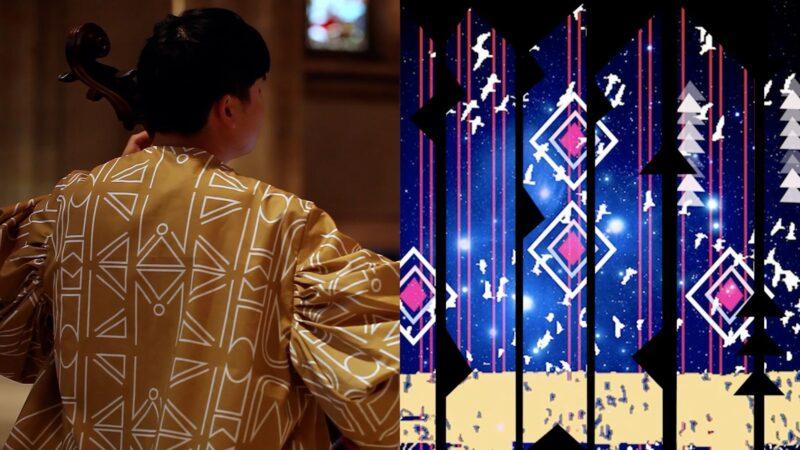
In this episode Thulani Rachia and Jamie Berry (Te Aitanga-a-Mahaki, Rongowhakaata, Ngāti Porou, Ngā Puhi) discuss Thulani's obuyile (2021-ongoing) and Jamie's Hiwa-i-te-rangi (2023).
Ka Mua Ka Muri is a partnership between LUX Scotland and CIRCUIT and has been made possible with the support of The British Council and Connections Through Culture.
List of terms
For our Scottish listeners, here's a short glossary of key Māori terms that may be featured in this conversation;
Aotearoa - Māori name for New Zealand
Iwi - tribe
Matariki - Māori New Year festival marked by rising of the star cluster Matariki (Pleiades)
Marae - Māori meeting house
Pākehā - New Zealander of European descent born in Aotearoa
Taonga Pūoro - traditional Māori musical instruments
Tupuna - ancestors
Mahi - work
Whakapapa - lineage/ancestry
Kaupapa - project, theme
Taniko - finger weaving
Tūpuna - ancestors, grandparents
Pou - upright poles
Tairāwhiti - town on the East Coast of Aotearoa
Wāhine - female
List of topics
00:00: Introduction
01:30: Jamie on key concerns and methodologies in her practice; she describes her iwi (tribal) affiliation, and working in Video, Audio, Design.
02:45: Thulani on key concerns and methodologies in his practice; working as a South African artist addressing Colonial legacies and how they manifest in the contemporary moment; repair and recovery of Indigenous practices. He describes his practice in Moving Image, Music Composition, Design, Sculpture.
04:16: Jamie describes her work Hiwa-i-te-rangi (2023) as a response to Matariki (the Māori New Year). Matariki as an opportunity for rest; yet ironically a busy time for Māori artists as the annual celebration becomes more mainstream. Her work Hiwa-i-te-rangi describing the meaning of each Matariki star. Inspiration of Jamie's Marae (Māori meeting house particular to her iwi) and it's unique painting. Use of sound. Collaborating with Te Kahureremoa on the artwork over Covid. Representation in the work of Tupuna (Ancestors), Jamie's family and their children.
09:30: Thulani on obuyile (2021-ongoing), translated as 'the one who returns'. Relationship to time. The development of the work for a festival.
11:00: Thulani on dreams as basis for obuyile. Dream as a practice from Nguni people (Southern Africa). Communicating and being guided by ancestors and elders in the dream space. Development of music on walks. Architecture as an archive of Colonial history. Inspiration of slave abolitionist Frederick Douglass on the structure of the work.
14:45: Jamie on dream as inspiration for her work; the direction to work in digital at a time when she was "anti-computers, anti-digital... The dreams were so strong that I had to do it". Subsequent training to develop digital skills. Visit from Tūpuna (Ancestors) in dreams and asking for guidance. Connecting with other Indigenous cultures and their relationship to dream.
17:20: Thulani on pattern in obuyile. Patterns as a coded system developed from the Zulu word 'Nkulu' which means 'wise elder'. Instruction in dream to honour their ancestor through cloth, subsequent making of "architectural garments" worn by the performers in obuyile. Use of pattern in the works 7 day structure. Sound as a form of healing. Silence as the main component of the composition. Rest as a part of healing.
22:32: Jamie on pattern and iteration across her practice. Source of these motifs being drawn from the unique art of her Marae (iwi/tribal meeting house). Sound as pattern, using sound to "set the scene" and pull audiences into a space. Interactivity. Her background as a DJ "I structure my soundscapes to be like a (DJ) set". "A lot depends on the kaupapa" (concept or idea).
25:00: Impressions of each others work? Thualni speaks to Hiwa-i-te-rangi. Shared themes of working from dreams. The triangle motif in both artist's practice.
26:50: Jamie notes her use of Tāniko (a traditional Māori finger weaving technique) and the use of triangles in her work. The triangle as a subliminal healing / female energy. Thulani notes Jamie's use of upright poles and landscape in her video; Jamie discusses the sculptural presentation of Hiwa-i-te-rangi as projections onto a series of Pou. Showing the work in Tairāwhiti (Jamie's home town) "It means a lot".
31:00: Thulani on the dream triangle in Nguni culture, the significance of each apex in the triangle. Honouring ancestors through the triangle shape.
32:30: Thulani on the garments in their work, the garments operating as "counter architecture". The performers in obuyile wearing the garments as "an architecture of sanctuary".
35:25: The church as a place of sanctuary, and also historically as factor in the Colonial process; making the church a safe space.
36:30: The development of the sound in obuyile and the 7 day structure of the video version of the work. Archiving the iterations of the work, "documentation beyond documentation" and this material becoming it's own work.
37:50: Jamie discusses her practice of gathering and "hoarding" images. Working with the sound first when making a work, then adding images to the sound. Noting of difference when it's a commissioned work.
39:20: Thulani notes how the work slows down time. Jamie discusses her precise production engagement with numbers. Jamie discusses how time passes differently in a VJ context, and when collaborating with others.
41:00: On the vocals in Hiwa-i-te-rangi by wāhine (female) artist Te Kahureremoa, and the collaboration between her and Jamie. Jamie notes her female collective 7558.
42:30 Jamie and Thulani conclude by noting the synergies in their work. Thulani notes "it feels quite wild"
44:10 ENDS
-circuit.jpg)
,-part-of-the-wastelands-(2024).-installation-view,-auckland-art-gallery-toi-o-tamaki,-2025.-image-courtesy-of-the-artist.jpg)