Order CIRCUIT: Dialogues in Artist Moving Image for $75 plus free shipping in Aotearoa here.
CIRCUIT Artist Moving Image was founded in 2012 with the goal of creating an international audience for Aotearoa New Zealand artists working with the moving image. Having spent the previous ten years working in the New Zealand Film Archive, I was acutely aware of a barely articulated history of practice dating back to the 1970s, and, as a curator, I was frustrated by a lack of access to more recent works being shown around the country, selected coverage of which only filtered through months later via reviews in print publications. Was there a better way of supporting these works and artists?
To me, the moving image has a remarkable capacity to fold together image, time, performance, sculpture, sound and conceptual practice in a single artwork. Encompassing so many disciplines, no other art form seems so malleable in its dissemination, working in the established forums of gallery and cinema but also making its way through the world via inexpensive duplication, digital transfer, and occasionally broadcast media. How could artists’ moving image in Aotearoa be articulated as a dynamic area of art practice, with its own medium-specific concerns and an ongoing relationship to interdisciplinary practice?
A pivotal moment in CIRCUIT’s genesis was a residency I undertook in 2009 at LUX, the London-based artist moving image agency. Director Benjamin Cook expressed that until he’d met me, he “…had no idea this kind of work existed in New Zealand.” Immediately I wondered if there was room for a new institution actively supporting artists’ moving image in Aotearoa. What kinds of opportunities might the artists gain, simply from having their works seen? How might such an organisation generate new works and opportunities for artists? Could this new organisation present Aotearoa artists as dynamic contributors to contemporary international dialogues?
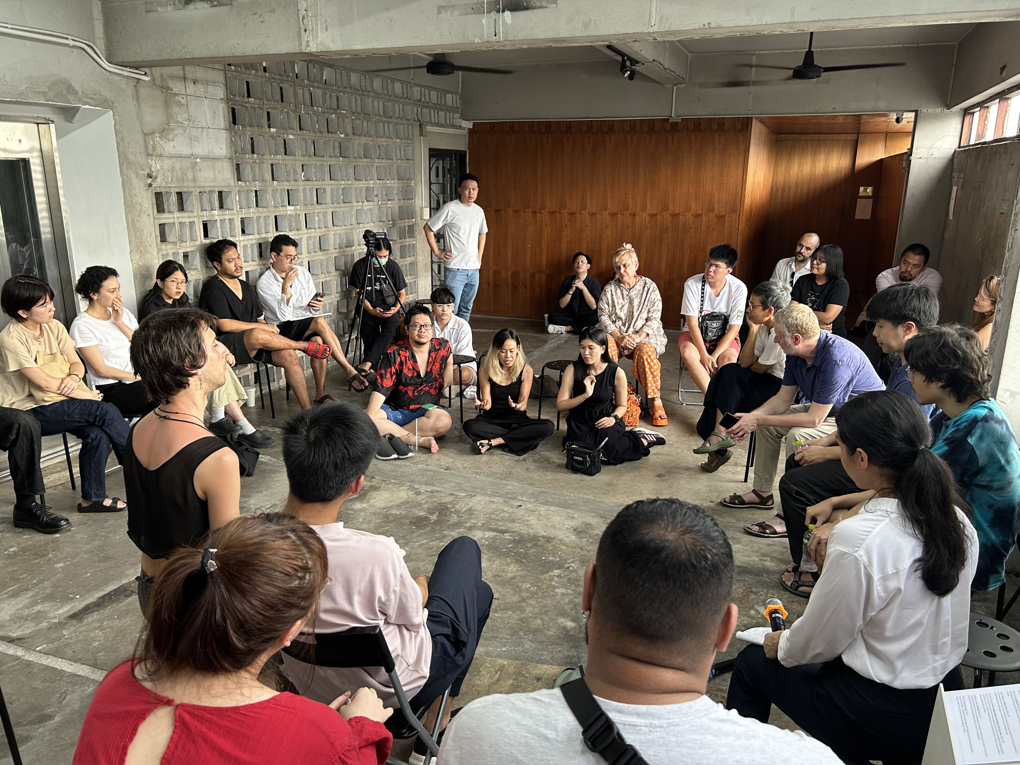
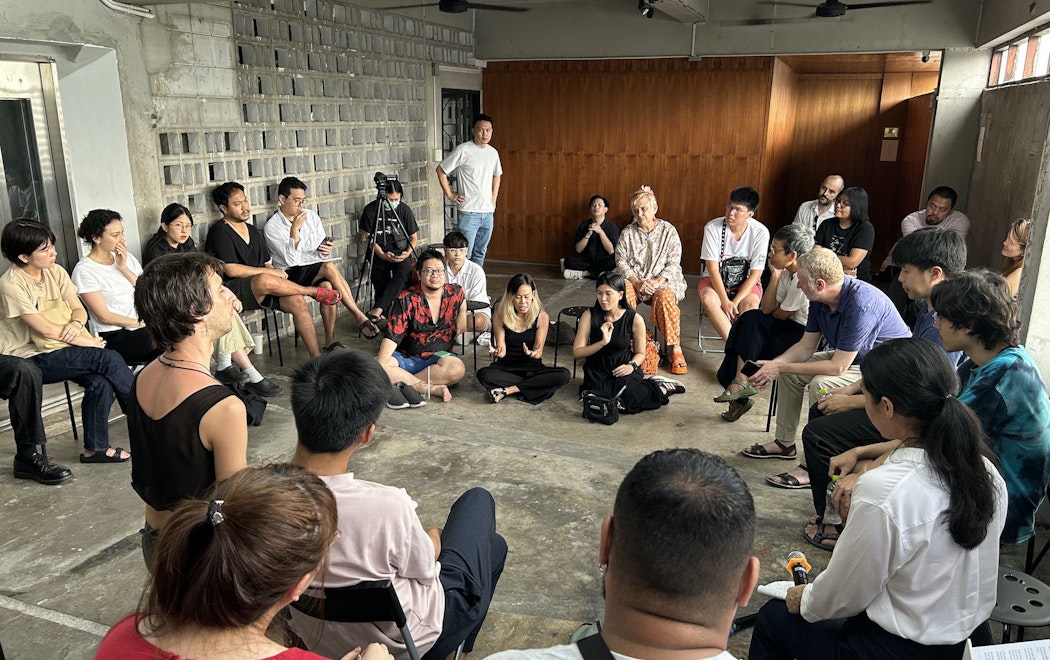
Legacies Gathering, Storage Gallery, Bangkok (2023). Curated by May Adadol Ingawanij.
So, CIRCUIT. The name itself derives from the word ‘circulation,’ referring not only to the actual movement of artworks through the world but also to the transmission and exchange of ideas embedded in artists’ practices. It also suggests a circularity, inviting feedback and interaction with audiences. In contrast to the traditional model of a bricks-and-mortar institution, CIRCUIT was conceived as a highly mobile, digital-first enterprise. Just as art history has largely been understood through reproduction, the CIRCUIT website launched as an online catalogue of compressed streaming video, using the transmissibility of a web browser to present 250 works by 65 artists to a worldwide audience. Alongside, a series of newly commissioned essays and conversations surveyed current exhibitions and developments in local practice. The necessity to commission new works soon followed. The ongoing commission series that this publication documents has come to be CIRCUIT’s flagship contribution to the production of new work in the local arts ecology.
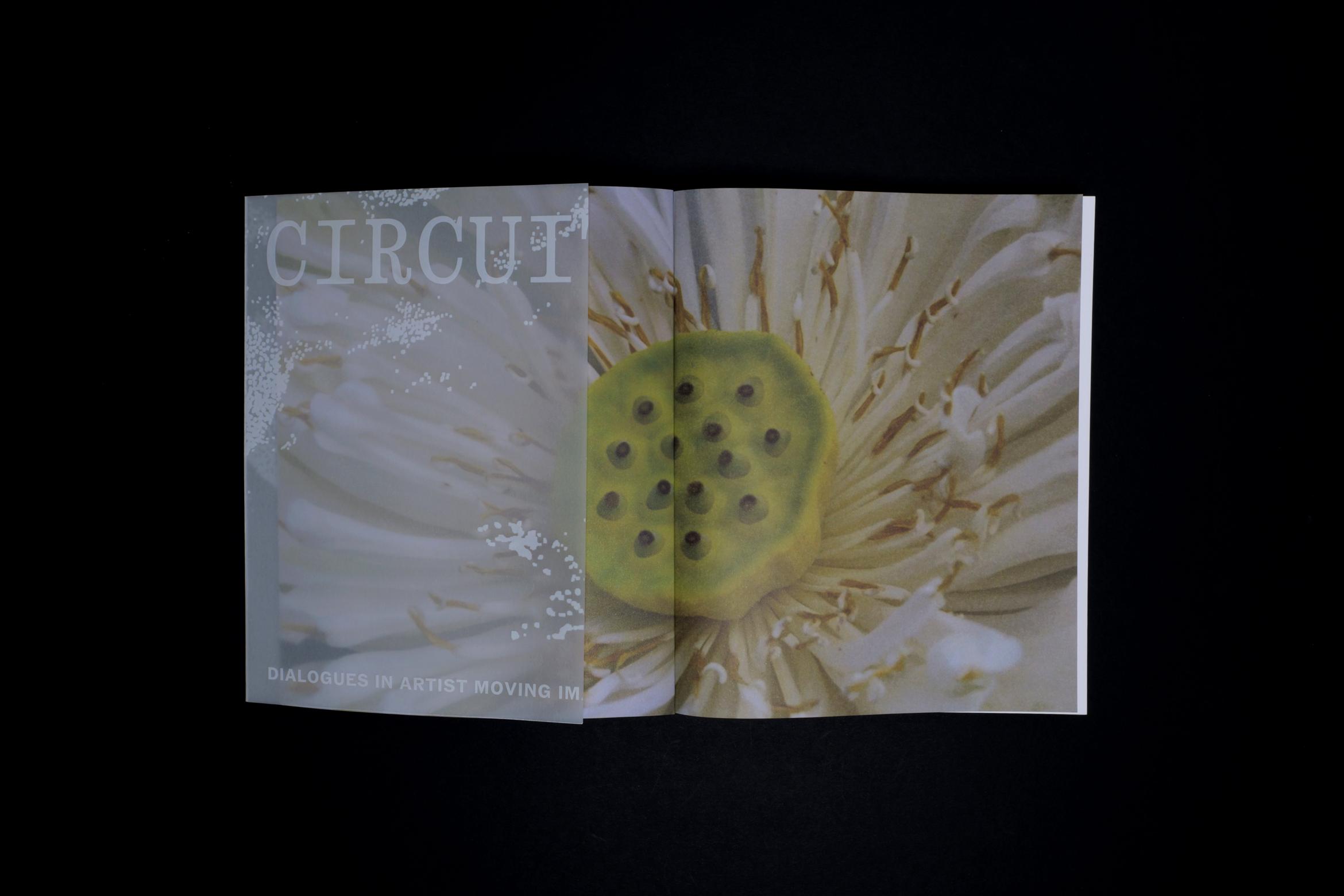
The cover of the CIRCUIT publication features a still from Mnemosyne, an animation by Thai-born, Aotearoa-based artist Sorawit Songsataya; one of works commissioned by CIRCUIT in 2022 as part of the exhibition Otherwise-image-worlds. Working with a set of images drawn from the artist’s country of birth and that of their adopted home, the film is an attempt to bridge geographic and familial distance. Writing about CIRCUIT in 2025, Mnemosyne seems an apt metaphor for the international collaborations that underpin this publication, all of which use digital images to traverse distance and create points of connection between works, artists, curators, and audiences.
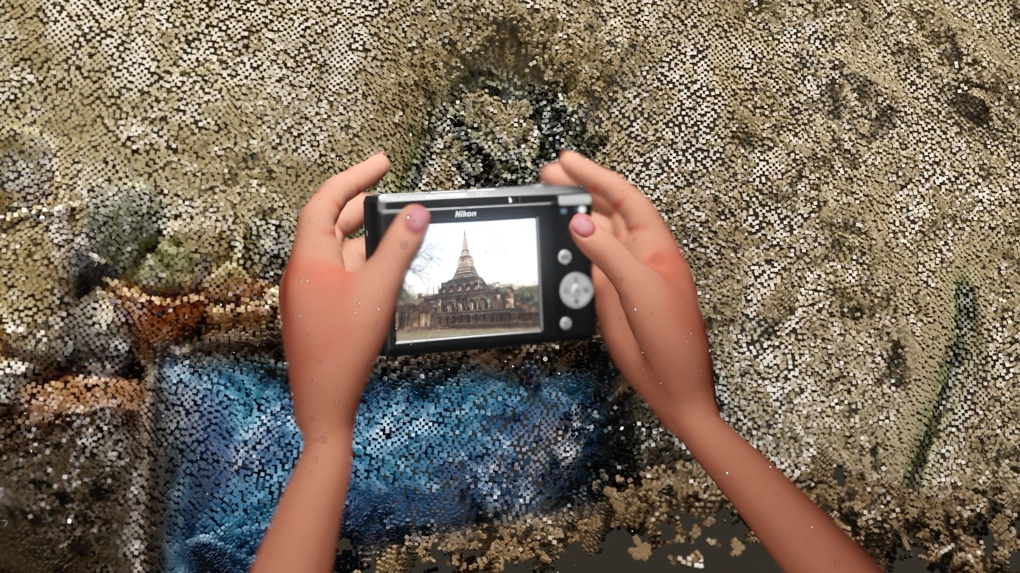
Still (detail) from Sorawit Songsataya, Mnemosyne (2022). Commissioned by CIRCUIT with the support of Te Uru and Creative New Zealand as part of Otherwise-image-worlds (2022). Curated by Tendai Mutambu.
Since 2015, CIRCUIT has commissioned and presented nine programmes of new artist films. Each project is conceived by a curator based in a transnational context, including Europe, North America, Thailand, and Australia. For each programme, up to six Aotearoa artists—and sometimes an additional international practitioner—are invited to make a short work no more than 15 minutes in duration that responds to the curatorial premise set by the curator. Over the past ten years, a total of 46 works have been commissioned.
Originally devised under the banner of ‘Artist Cinema Commissions’, the project has grown to embrace multiple contexts, from sit-down screenings to expanded installation (sometimes with other media), and online streaming. Often programmed and distributed over a number of years, the projects have adapted to different institutional contexts, both locally and worldwide. Often these have been accompanied by symposia, talks and workshops. While CIRCUIT sought opportunities in Aotearoa, each curator also brought their own networks to extend the reach of the works. For several, this initial immersion in art from Aotearoa has since developed into long-term engagement with CIRCUIT and the artists, extending into other projects.
But why refer to cinema in the series’ title, given CIRCUIT uses ‘moving image’ as its defining terminology? For Aotearoa artists, cinema is, on the face of it, an unlikely vehicle. Most artists using film or video present their work in the gallery; a natural extension of an art-conceptual lineage that incorporates spatial and material dynamics, mixed media, and a choreographed encounter between work and viewer. Further, critics and artists are wary of what curator Tendai Mutambu calls cinema’s “demand for spectacle and efficiency.” And many have critiqued the prescriptive parameters of the cinema space. which is strait-jacketed by its adherence to the conditions of screen, projector, stereo sound, and seated audience. CIRCUIT sees this differently. Firstly, unlike in Aotearoa, internationally, cinema is a viable space for artists’ moving image practice, with support at all levels for production, distribution, and critical reflection. We wanted these mechanisms to be available to artists in and from Aotearoa. Secondly, CIRCUIT wanted to explore the potential offered to artists by predicating the viewing experience on an audience required to engage from beginning to end. We also wanted to see what would happen if artists were afforded the technical resources of sound and scale in a space calibrated purely for the moving image. And finally—taking up artist Julian Dashper’s idea of condensing a practice to the dimensions of carry-on luggage—CIRCUIT saw cinema’s emancipatory potential: a single digital file able to reach the whole world!
---
Each project in CIRCUIT’s Artist Cinema Commission series has drawn upon a distinct theme, and across the years the nine curatorial provocations have differed widely, encompassing conceptual questions including: the nature and potential of cinema; archival materials drawn from poetry and conceptualism; inquiries operating at the crossroads of the political and personal; and investigations into multisensorial forms of knowledge. This book reproduces the essays produced at the time of the commissions, which introduce the individual concerns and curatorial approach of each project. These essays are accompanied by visual documentation and short descriptions written by CIRCUIT editor Jess Clifford. Looking back at the projects with the benefit of time and space, several key themes begin to emerge.
The first two commissions, in 2015 and 2016, invited responses to the work of Joanna Margaret Paul (1945–2003) and Julian Dashper (1960–2009), two interdisciplinary artists whose premature deaths had left ‘holes’ in the culture which were beginning to be unpacked in exhibitions and publications. For both artists, the moving image was the least visible and recognised facet of their art making. Paul was a pioneer of multidisciplinary practice in Aotearoa, worked in painting, poetry, photography, and film. She was part of the women’s art movement in the 1970s, and her work drew heavily on the dailiness of motherhood and domesticity. Her moving image works were handheld small gauge films, many in black and white, some in colour, shot using only natural light. Dashper was a painter, sculptor, and arch conceptualist whose work often marked time or absence. His videos were shot on a digital handy-cam in the studio, using a fixed tripod, and often taking the form of a direct address to camera. Both Paul and Dashper were distinctly local artists with international points of reference that ranged from ancient Greece to Marfa, Texas.
Six artists respond to the poetry of Joanna Margaret Paul was curated by Canadian filmmaker and academic Solomon Nagler and myself, with textual prompts in the form of excerpts from Like Love Poems (2006), a collected volume of Paul’s poetry edited by Bernadette Hall. (Nagler had found a copy of the now out-of-print publication in a second-hand bookstore.) Laid out painstakingly on the page, these poems evoke an outer world wrought through inner dialogue, and were offered as starting points to artists Nova Paul, Rachel Shearer, Sonya Lacey, Miranda Parkes, Shannon Te Ao, and the collective popular productions. In response, the commissioned artists researched deeply, not only into the poems and films, but also Paul’s wide-ranging interests and principles, including her role in the feminist movement. At the same time, their works took the opportunity to present stark tonal, conceptual, and aesthetic contrasts to Paul’s unadorned domesticity and her now-worn celluloid, offering instead vivid colour, evocative and sometimes abrasive musical soundtracks, and an ideal model home made from cast salt.
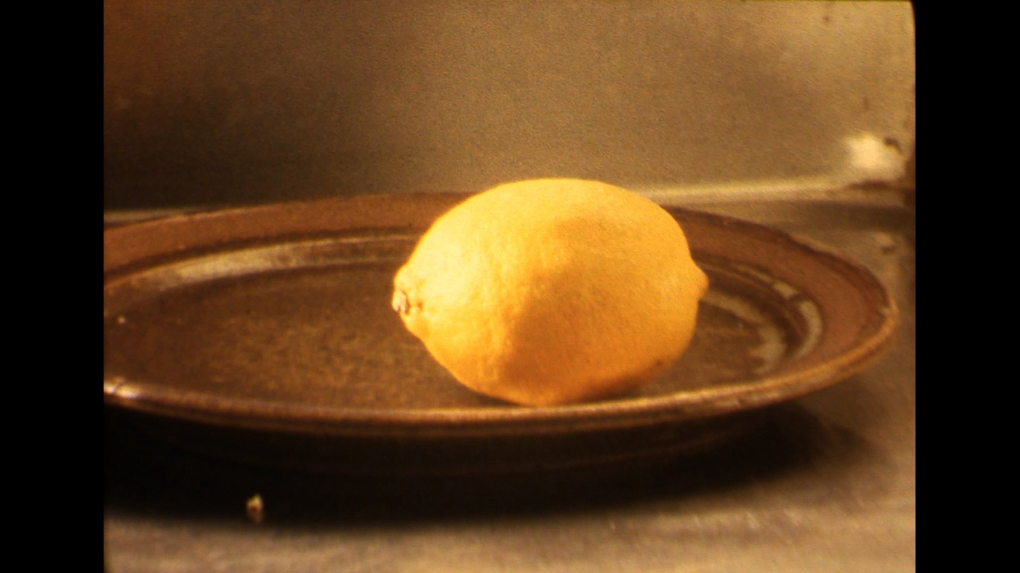
Still from Still Light (2015) Nova Paul. Commissioned by CIRCUIT with the support of Creative New Zealand as part of Six Artists respond to the poetry of Joanna Margaret Paul (2015). Curated by Solomon Nagler and Mark Williams.
Alongside the new works, CIRCUIT engaged UK curator Peter Todd to curate a programme of Paul’s own moving image works, which were painstakingly re-transferred from the original films. A third programme, I am an open window, which presented several of Paul’s film works alongside the new commissions, screened as part of the 2015 Experimenta at the BFI London Film Festival. Frieze wrote a review, and Paul’s work drew parallels with Scottish filmmaker Margaret Tait and Argentinian Marie-Louise Alemann. Together, the projects would prove remarkably far reaching, helping to spark a new wave of interest in Paul’s work in Aotearoa that would culminate in a sprawling touring survey exhibition in 2022.
For This is not film-making, the then UK-based curator George Clark invited artists Gavin Hipkins, Juliet Carpenter, Daniel Malone, Louise Menzies, and Australian artist Nathan Gray to consider selected texts from This is not writing, a posthumous anthology of Julian Dashper’s writing. A more prosaic group of texts than Paul’s poems, Clark’s selected provocations included an interview, a list, an artist statement, and short exhibition notes. Clark had been introduced to Dashper’s practice by Nathan Gray, who, whilst driving Clark around Melbourne, had described Dashper’s 2003 lecture-performance Untitled (this painting), which takes the form of an extended artist statement made to camera Ironically, Gray’s account of the work—conveyed through distance and translation—proved to be the perfect introduction to Dashper’s artistic method. In the resulting commissions, these ideas were extended via contemporary tools and technologies, including the grainy ‘poor’ copy seen on websites like Ubuweb and YouTube, the use of a Recurrent Neural Network, and a lecture by Gray that detailed the conceptual and physical parameters of the digital video he was making for the viewer. Other works in the programme addressed themes of distance and artistic influence. George Clark’s own engagement with Dashper would also prove to be generative; he later curated a small survey of Dashper works, presented by CIRCUIT as a 24-hour installation at the former Wellington Art School, a nod to Dashper’s instructional practice. In his essay in these pages, Clark recalls the encounters with artists, images, and interior spaces that have shaped his relationship with the art of Aotearoa, unfurling over the past decade.
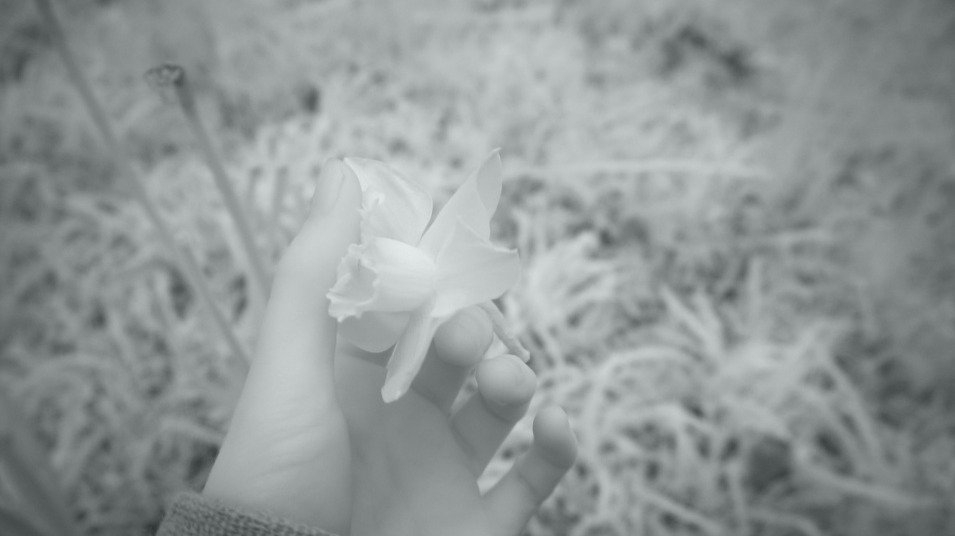
Juliet Carpenter with Gregory Kan, meantime (2016). Commissioned by CIRCUIT with the support of Creative New Zealand as part of This is not film-making. Artists work for cinema (2016). Curated by George Clark.
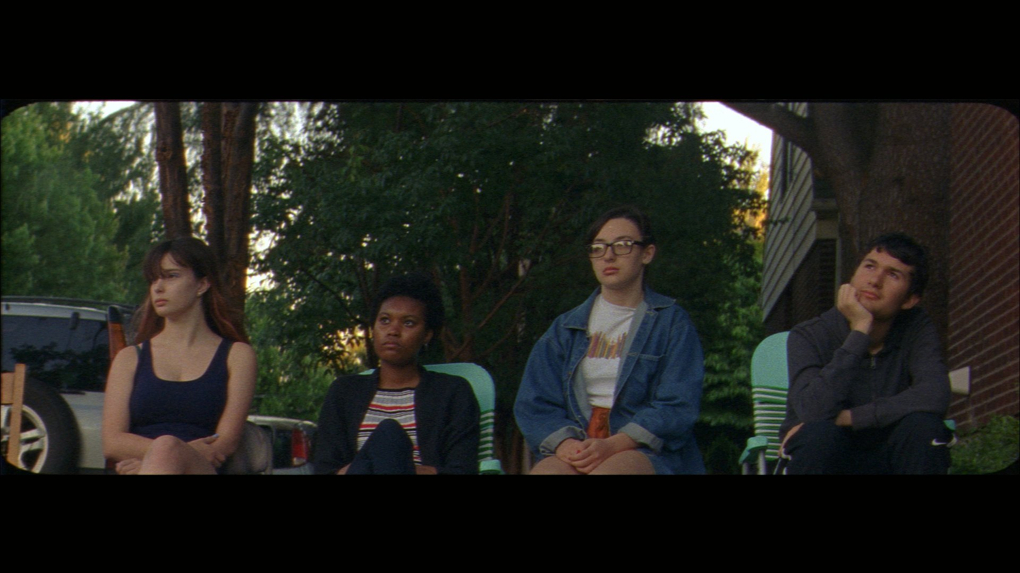
Sam Hamilton, FOR THIRTY YEARS, NANCY WOULD SIT ON THE STREET CORNER AND WATCH THE SUNSET (2017). Commissioned by CIRCUIT with support from Creative New Zealand as part of Thick Cinema (2017). Curated by Mercedes Vicente.
By contrast, the following year's project, Thick Cinema moved closer to the realm of the personal, asking: “What is the role of the body and sensorial experience in cinematic intelligibility and meaning?” Curated by Mercedes Vicente from her home in London, the prompt was inspired by the work of The Sensory Ethnography Lab (SEL), a Harvard University-based laboratory working in film, performance, and installation. The Lab’s goal of creating sensorial encounters through the moving image was exemplified in the 2012 film Leviathan, directed by founder Lucien Castaing-Taylor and Véréna Paravel, where cameras were placed in often visceral, mobile proximity to sea life, industrial fish processing, and human labour Similarly, the resulting commissions by Fiona Amundsen, John Di Stefano, Sam Hamilton, Kim Pieters, and Joyce Campbell were marked by an intense encounter with their subject, as if such attention might break through the imaginary fourth wall to connect the viewer with an acute sense of lived experience. Implicit in the work of the SEL and Vicente’s prompt was also a critique of cinema’s tendency towards the illusory, evident in the flash of a 16mm film roll ending, a jolted tripod, and the impossibility of a legible image of the lithe movements of the more-than-human world.
In 2018, Canadian academic Erika Balsom was invited to take up the curator role. In what seemed urgent then, and prescient since, Truth or Consequences asked: “How can artists respond to a ‘post-truth era’ of humanitarian and ecological crisis?” While the formal techniques and topical concerns engaged by Vea Mafileʻo, Jeremy Leatinu’u, Janine Randerson, Bridget Reweti, and Andrew de Freitas were diverse, their works all shared an interest in exploring how a documentary impulse can facilitate encounters with our shared world. Alongside, several artists tested the subjectivity of memory and testimony, as well as the veracity of images, juxtaposing spoken biography with subtly disjunctive footage, and examining the supposed appearance of stigmata on the body of a young woman. Other works let contemporary voices speak their understanding of history, the urgent necessity for peaceful coexistence with the natural world, and questions of narration and translation.
In 2019, the position was held by expatriate New Zealander Serena Bentley, then a curator at the Australian Centre for the Moving Image (ACMI). For Personal Space, Bentley used the opportunity to reflect on her own notions of home, acknowledging both the pain of distance and recent ruptures such as the Christchurch Mosque shooting. Alongside works by Janet Lilo, Tanu Gago, Natasha Matila-Smith, and Campbell Patterson, the programme included Atong Atem, an Australian artist of South Sudanese descent. Each artist voiced expressions of dislocation. While sometimes this was wrought from the broad expanse of history, colonisation, and displacement, other works expressed a more localised frustration, addressing the housing market, or relationships typically associated with the home. The programme featured a strong theme of performative absurdism, with the camera as witness to slow time, a bombastic view of Pasifika masculinity, and the surreal spectacle of Patterson stuffing his underwear into a bottle of orange juice.
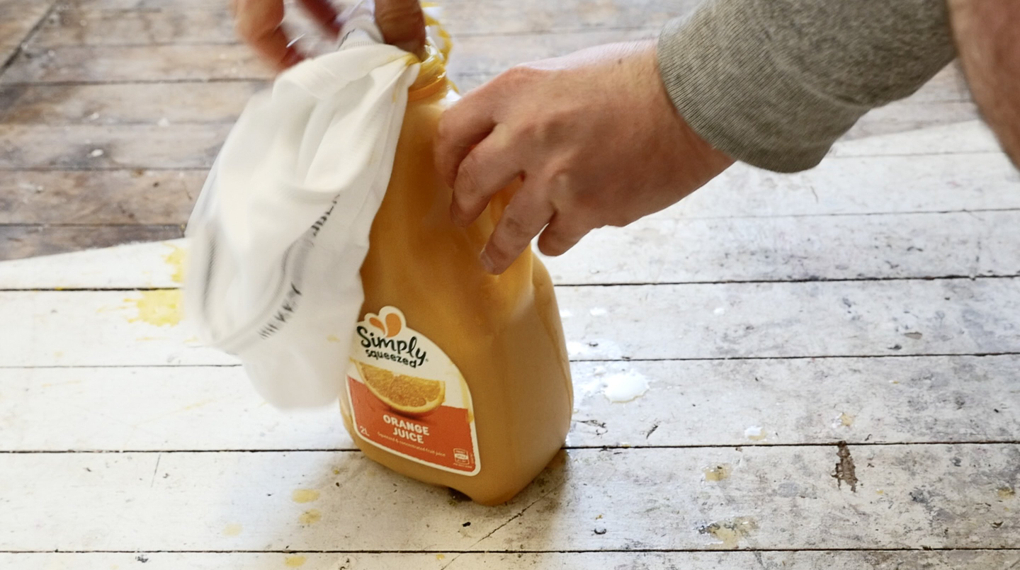
Campbell Patterson, Untitled (2019). Commissioned by CIRCUIT with the support of Creative New Zealand as part of Personal Space (2019). Curated by Serena Bentley.
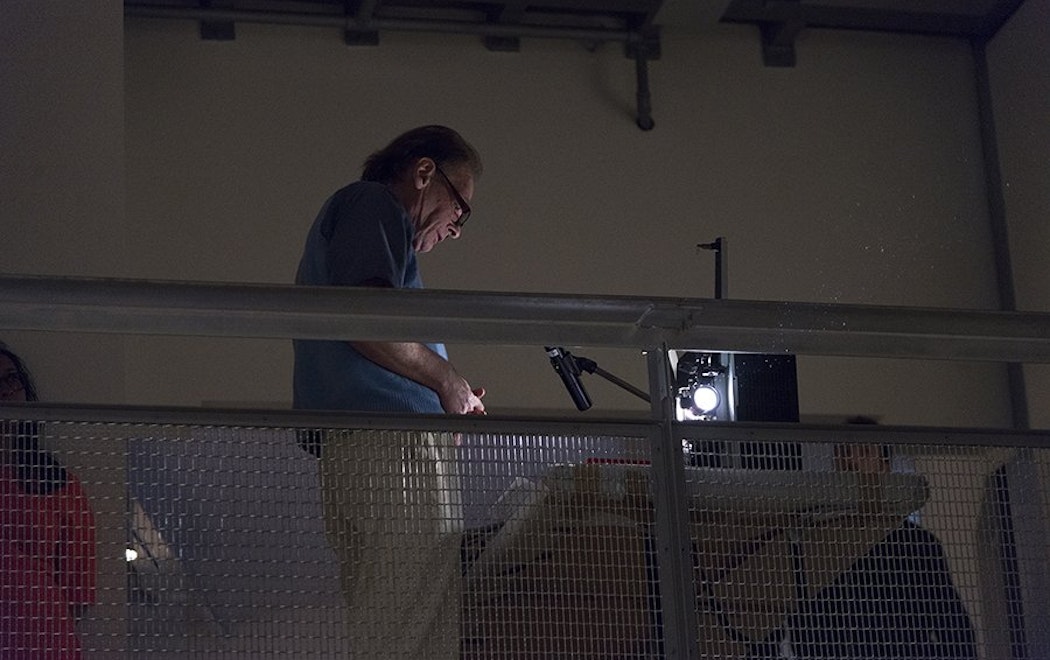
The shared vulnerability underlying Bentley’s project also prompted reflection on behalf of the organisation. While CIRCUIT does not have a public-facing space, we have spent the past 12 years ensconced in a warehouse of artists’ studios in Newtown, a traditionally working-class suburb of Te Whanganui-a-Tara Wellington undergoing rapid gentrification. Personal Space was staged to acknowledge our surroundings and the changes in the neighbourhood: the premiere and accompanying symposium thus took place in the Newtown Community Centre, traditionally a hub for community outreach. Alongside, we presented a public art project called Home Movies, placing 30 works in 22 of Newtown’s shops, businesses, and cultural spaces for one day. Each of the works acknowledged current and past histories of Newtown, from the suburb’s high density of artist studios to the waves of Pasifika migration, and mental health support networks.
The following year, we again looked outside the dominant spaces of the inner city towards Porirua on the Kāpiti coast, where we partnered with Pātaka Museum of Arts and Cultures to present Sovereign Pacific / Pacific Sovereigns, curated by the Singapore-based academic David Teh. While the groundwork had been laid for a collaboration with Teh by March 2020, plans for his travel to Aotearoa vanished as the scale of the global pandemic unfolded. Studio visits swiftly became Zoom meetings and an exchange of Vimeo URLs. Nevertheless, from the complex knot of lockdowns, artists Alex Monteith, Ana Iti, Philippines-based Gary-Ross Pastrana, Rangituhia Hollis, and Sione Monū delivered expansive results that looked beyond that crisis to bring together diffuse locations under the umbrella of climate anxiety, queer futurity, and language revitalisation. At the symposium, Teh spoke from his home in Singapore, offering his keynote at 5.30am local time, while the afternoon sun stretched across the audience at Pātaka.
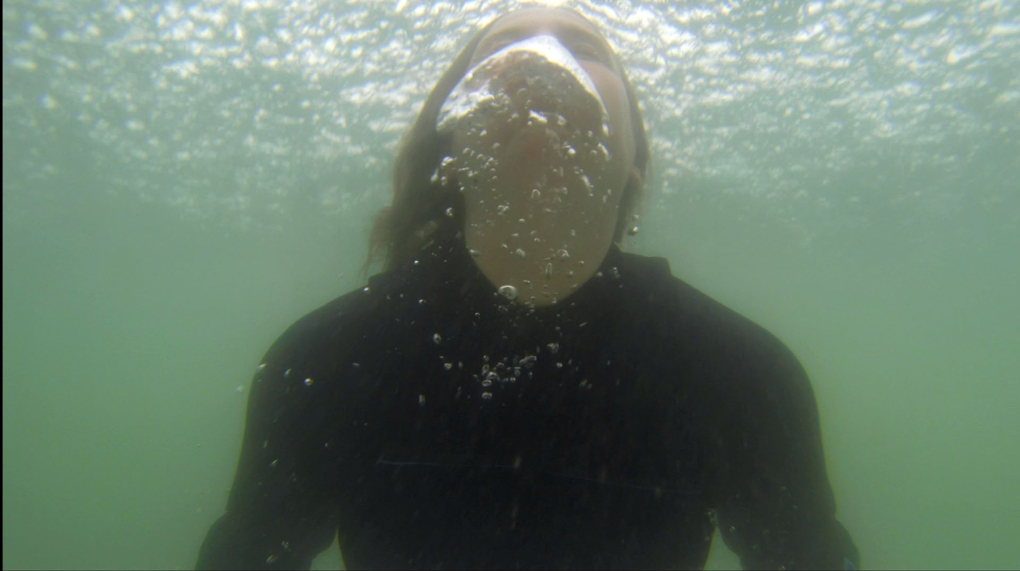
Still from Deep Ocean Currents (2020) Alex Monteith. Commissioned by CIRCUIT with the support of Creative New Zealand as part of Sovereign Pacific / Pacific Sovereigns (2020). Curated by David Teh and Mark Williams.
By 2021, CIRCUIT’s tenth anniversary was on the horizon. Aotearoa-born curator Tendai Mutambu found himself temporarily back in Tāmaki Makaurau Auckland and was invited by CIRCUIT to work on an expanded cinema project focusing on artists’ use of animation for Te Uru Waitākere Contemporary Gallery. The genesis of the animation concept stemmed from Mutambu’s consideration of some broad questions about the state of artists’ practice: What were the defining characteristics of artist moving image practice in Aotearoa? Given the limited financial support for this practice, how do artists develop a material world that affirms their research and life experience? The project presented a dexterous reimagining of the emancipatory potential of animation, which was allied to contemporary political and personal concerns. Otherwise-image-worlds featured four Aotearoa artists—Juliet Carpenter, Tanu Gago, Ary Jansen, and Sorawit Songsataya—alongside UK artist Danielle Brathwaite-Shirley. Each was invited to work with animation as a mechanism for worldbuilding, bearing in mind that the form can so often present as a slick, guileless medium—and in doing so forgo critical perspectives on traditional structures of power. Several began from a place of formative influence, disrupting arcade and home console video game environments with questions about gender, goal-driven logic, and the formation of medical pathologies. Other popular forms pressed into service included a set of 3D stereoscopic glasses, which animated the colourful seas of Tanu Gago’s collaboration with the Ballroom house Coven Aucoin. Connie Brown, then in a curatorial role at Te Uru, wrote the essay that accompanies these works for The Art Paper, and we are pleased to reproduce this here.
In a return to the international ambitions of the commissions, 2022’s programme Legacies, curated by May Adadol Ingawanij, proved to be a model for curatorial practice across cultures. A Thai-born, UK-based academic, Ingawanij had researched histories of South-East Asian cinema, and was deeply invested in contemporary non-European practice. Key to her process was to develop a dialogue with artists Edith Amituanai, Martin Sagadin, Ukrit Sa-nguanhai, Sriwhana Spong, and Pati Tyrell. An early text articulated Ingawanij’s attempt to write a poem, something expressing her current situation as a Thai expat living in London, with family both here and there; seeking to reconcile a place to be, and maybe, in a strife-torn world, what to do next. In conversation, the artists voiced their own responses, speaking not only to this text but their own experiences. From these exchanges, Ingawanij developed her curatorial theme of Legacies, and the artists used their works to explore the complexities inherent in familial ties, artistic production, and spiritual heritage.
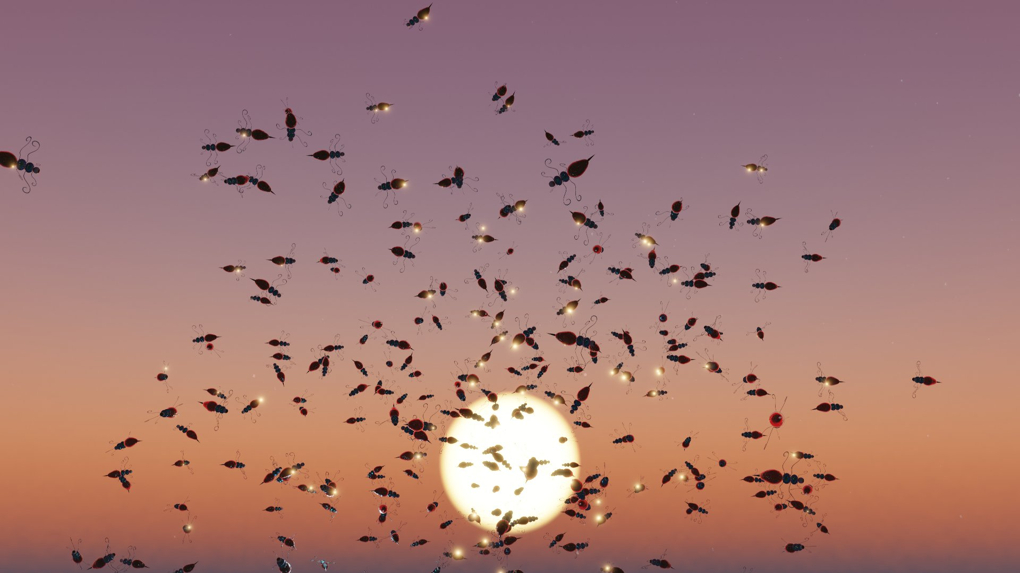
Sriwhana Spong, And the creeper keeps on reaching for the flame tree (2022). Commissioned by CIRCUIT with the support of Creative New Zealand as part of Legacies (2022). Curated by May Adadol Ingawanij.
Over the next 18 months, Legacies wound its way through institutions in Aotearoa and abroad, culminating in an expanded presentation in Bangkok, Thailand. In attendance were members of the local art and film community, Legacies filmmakers Pati Tyrell and Martin Sagadin, and artist Tanu Gago. It can be hard to quantify the effect of showing a programme of work from Aotearoa in an international context, but these conversations were remarkably generative, with the audience reflecting not only on the works themselves but also using Ingawanij’s prompt to discuss structural issues in contemporary Thai society. In many ways, it was an affirmation of the international networks and friendships that CIRCUIT has sought to foster since its inception in 2012—with one of its first international connections being an invitation to CIRCUIT from Ingawanij to present work from Aotearoa at the 2011 Bangkok Experimental Film Festival (an event also attended by future CIRCUIT curators George Clark and David Teh).
During the Bangkok presentation of Legacies, Erin Gleeson, a curator who had previously spent 16 years working in Cambodia as Artistic Director of SA SA BASSAC, an exhibition and residency space, led a panel discussion with the artists. It was immediately apparent that the artists were being asked questions that hadn’t been posed in Aotearoa and I subsequently invited her to be our next curator-at-large. Her 2025 programme, Leap to the Place of Two Pools, invited artists Kah Bee Chow, Selina Ershadi, Kite, Sonya Lacey, and James Tapsell-Kururangi to make new work that resisted the centrality of the visual in favour of multisensorial knowledge systems. Here again was exactly the kind of logic CIRCUIT has so valued in our international curators, an interest in testing the material and conceptual parameters of the moving image, acknowledging the ability and drive of our local artist community. The programme premiered at Te Pātaka Toi Adam Art Gallery in Te Whanganui-a-Tara Wellington as an immersive installation of five works. Each work was carefully curated by Gleeson to respond to the gallery’s idiosyncratic spaces, together forming a series of dynamic encounters of dream worlds, AI, presence, and absence. Stopping in Bangkok en route to Aotearoa, Gleeson introduced the international premiere of the works at the 2025 edition of the Bangkok Experimental Film Festival.
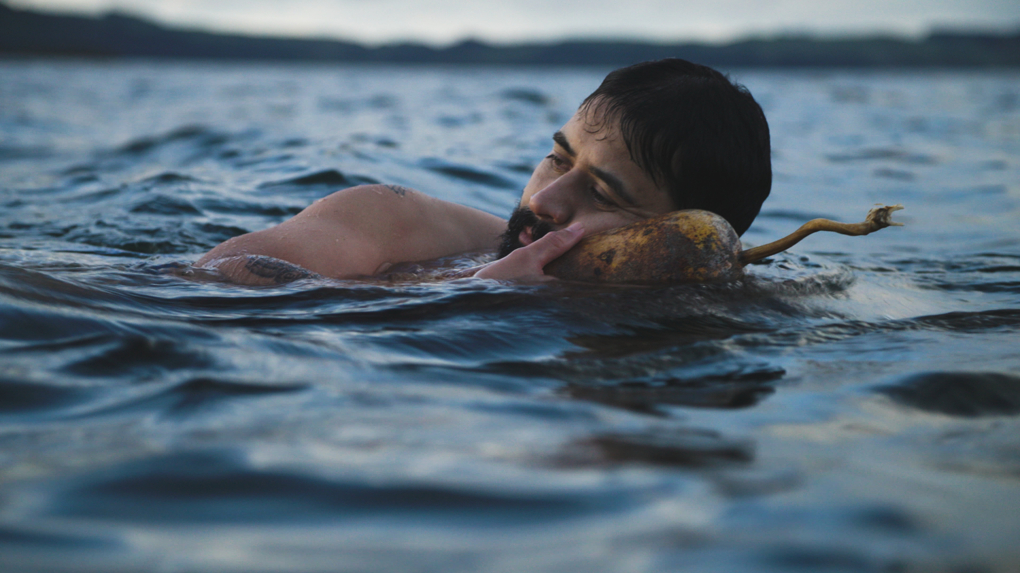
James Tapsell-Kururangi, James (2025). Commissioned by CIRCUIT with the support of Creative New Zealand as part of Leap to the Place of Two Pools (2025). Curated by Erin Robideaux Gleeson.
Revisiting ten years of CIRCUIT’s Artist Cinema Commissions, I am most grateful to all of our artists and curators for approaching the collaborative working relationship of each project with openness and trust. These nine projects have proven to be long-lasting collaborations for the artists, and they have given CIRCUIT an organisational foundation at home and internationally. For a country that is not well-funded and so far removed from art world centres, the portability of the series has proven a key means to foster and retain connections with international organisations and allies, and, in the process, create new audiences for artists beyond Aotearoa. Looking back at these 41 commissioned works and deeper into the recesses of the organisation’s history has also been a process of recognising the huge number of spin-off projects, collaborations, and networks that have been forged. Along the way, several projects have quietly presented the case for a rewritten framing of Aotearoa’s art and film history, one which acknowledges the dynamic contribution this country’s artists continue to offer our moving image culture. Finally, to our audiences at home and abroad, many thanks for your engagement with these artists, films, and with CIRCUIT. I hope these works from Aotearoa have brought and will continue to bring some new possibilities to the global cinematic form.
---
Order CIRCUIT: Dialogues in Artist Moving Image for $75 plus free shipping in Aotearoa here.